Accurate soil carbon modeling is essential to building trust in agricultural carbon credits. In our latest white paper, Building Trustworthy Soil Carbon Models for Carbon Crediting, we explore how Agoro Carbon is advancing the DayCent model through improved calibration, independent validation, and more accurate predictions of soil carbon changes in grazing systems. Discover how these scientific advances strengthen carbon quantification and provide buyers with greater confidence in the integrity of the credits they purchase.
Executive Summary
Soil carbon credits are only as credible as the science used to quantify them.
Agricultural systems are highly variable, soil-carbon changes are often small relative to existing soil carbon stocks, and the effects of management unfold over years to decades. A credible quantification system therefore needs more than a model that can reproduce observations; it needs a disciplined framework for calibration, validation, uncertainty analysis, process representation, and continuous improvement.
Key finding: DayCent-IGM validation
- 39.1% lower prediction error: Across 18 independent validation sites, DayCent-IGM reduced prediction error for soil carbon change rate by 39.1%.
- Near-zero bias: Bias improved from −0.081 to −0.001 Mg C ha−1 yr−1.
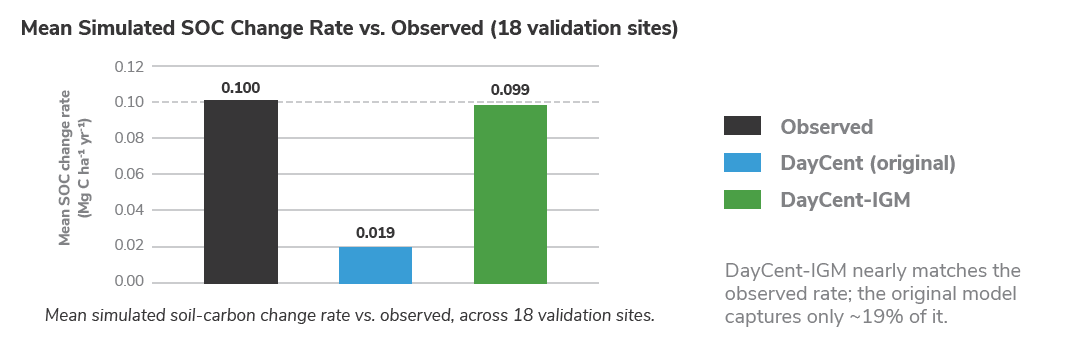
- Closer to observed outcomes: The observed mean change rate was 0.100 Mg C ha−1 yr−1; original DayCent simulated 0.019 and DayCent-IGM simulated 0.099.
Agoro Carbon’s program builds on DayCent, a process-based biogeochemical model with a long history of scientific use, and advances it specifically for the demands of agricultural carbon crediting. This work includes DayCent-CUTE, a framework for global sensitivity analysis, automated calibration, and uncertainty quantification, and DayCent-IGM, an extension that improves representation of grazing disturbance and vegetation recovery.
These developments reflect a broader scientific approach: identify influential processes and parameters, calibrate against field observations, evaluate performance using data not used for calibration, test whether structural changes improve predictions, quantify remaining uncertainty, and publish the methods and results for scientific scrutiny. Two peer-reviewed studies document these advances.
The central principle
Agoro Carbon Alliance does not simply apply an established model to generate carbon credits. We invest in testing, improving, validating, and documenting the science underlying the model to ensure it faithfully represents carbon dynamics in real-world fields and produces scientifically credible, independently defensible predictions.
Why soil carbon modeling requires scientific rigor
Soil carbon changes resulting from management practices – such as planting cover crops, reducing tillage, adjusting grazing, or changing nutrient management – are typically small and gradual relative to the larger and more stable soil carbon pool accumulated over decades or centuries. Detecting and attributing these changes requires accounting for the specific soil, climate, and management history of each field.
Process-based biogeochemical models are designed for this challenge. Rather than relying only on empirical relationships between management and observed carbon change, they simulate mechanisms governing plant growth, decomposition, nutrient cycling, and transfers among carbon pools. This mechanistic foundation allows the model to represent how management interacts with environmental conditions over time.
DayCent is one of the most widely used process-based models of this kind and has a decades-long history in academic research. Adapting and improving such a model for carbon crediting, however, requires additional rigor because model outputs have direct financial consequences and must withstand independent review.
For Agoro Carbon, scientific rigor therefore extends beyond selecting a published model. It encompasses how the model is calibrated, how its assumptions are tested, how uncertainty is quantified, how structural improvements are evaluated, and how results are independently validated.
Building a reproducible modeling framework: DayCent-CUTE
DayCent contains a large set of parameters governing decomposition, nutrient cycling, carbon transfers among soil pools, and the effects of temperature and moisture. Historically, calibration of process-based models has often relied on expert judgment and iterative manual adjustment. While this can be effective, it can also be time-intensive and difficult to reproduce systematically across diverse datasets.
For carbon crediting, a scalable and transparent approach is particularly important. Sensitivity analysis, calibration, and uncertainty quantification are standard elements of model development, but applying them consistently across many parameters and sites can be computationally demanding.
Agoro Carbon developed DayCent-CUTE (auto-Calibration, sensitivity, and Uncertainty analysis ToolSet) to address this challenge. The framework automates global sensitivity analysis, parameter calibration, and uncertainty quantification for DayCent (Wang et al., 2023). It identifies parameters with the greatest influence on model outputs, calibrates influential parameters using established optimization algorithms, and quantifies uncertainty that remains after calibration.
DayCent-CUTE independent evaluation
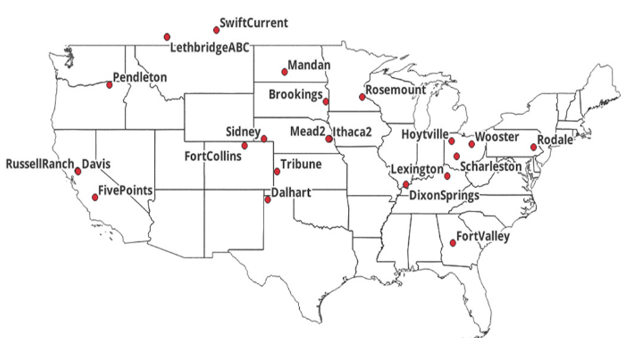
- 30 experimental sites spanning soils, climates, and management systems.
- 18 calibration sites: Nash–Sutcliffe efficiency (NSE) of 0.93.
- 12 independent evaluation sites: NSE of 0.92, supporting predictive performance outside the calibration dataset.
By automating these steps, DayCent-CUTE provides a consistent computational workflow that can be applied across large and diverse datasets. These results provide evidence that the calibrated model was not simply tuned to reproduce its calibration data but retained predictive performance across diverse conditions.
Why this matters for crediting
Independent evaluation is the critical distinction between a model that fits historical data and one whose parameterization generalizes to conditions outside the calibration dataset.
The same framework addressed a separate, longstanding challenge: initializing soil carbon pools. Rather than running a computationally expensive, multi-century spin-up based on uncertain land-use history, DayCent-CUTE initializes pools directly from measured field data – anchoring predictions to observed conditions at the start of a project period, consistent with VM0042 and other soil carbon protocols. DayCent-CUTE is published in the peer-reviewed journal Environmental Modelling & Software.
Improving the model where process representation matters: DayCent-IGM
Rigorous calibration can improve predictions, but calibration cannot fully compensate for a model that does not represent an important process. This distinction motivated a second line of research: evaluating whether DayCent’s representation of grazing management captured the mechanisms most relevant to soil carbon change.
In its standard form, DayCent represents grazing through removal of aboveground biomass and return of nutrients through manure and urine. These mechanisms capture important direct effects of grazing, but two additional processes can influence soil carbon dynamics: vegetation recovery following grazing and trampling.
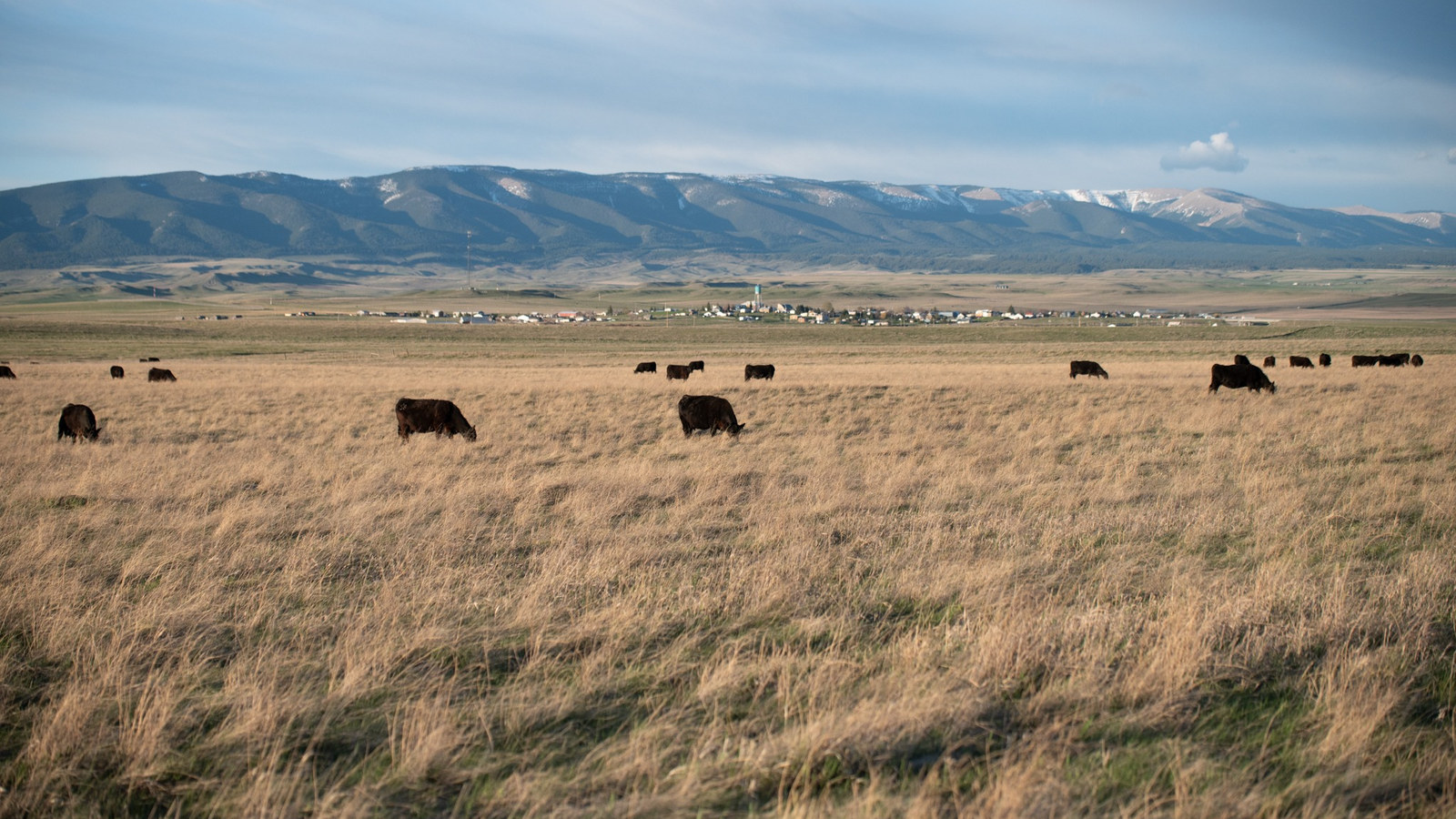
Vegetation recovery depends on factors including grazing intensity, residual biomass, rest duration, and growing conditions. Trampling can redistribute plant material and surface litter into soil pools that contribute to longer-term carbon storage. These processes were not explicitly represented in the original model.
Agoro Carbon developed DayCent-IGM (Improved Grazing Module) to add these mechanisms while retaining the established structure, inputs, and workflows of DayCent. A regrowth function represents vegetation recovery following grazing, while a trampling function transfers organic matter from vegetation and litter into soil pools.
This work is directly relevant to Agoro Carbon’s own portfolio; rangeland and grazing systems currently account for roughly 70% of Agoro’s issued credits. DayCent-IGM is the model extension purpose-built to improve how that majority share of the portfolio is represented – its regrowth and trampling components target the disturbance–recovery dynamics that most directly shape soil carbon outcomes on grazed land.
Testing model improvements against independent observations
The scientific value of a model extension depends on whether the added processes improve predictions when tested against independent observations. To isolate the effect of the structural modification, DayCent and DayCent-IGM were calibrated and validated side by side using data from 18 grazing experiments spanning six soil types and five climate zones (Wang et al., 2026).
Both models used the same calibration and validation site folds, optimization algorithm, objective function, and calibration parameters. Holding these factors constant allowed the comparison to isolate the contribution of the modified model structure rather than differences in calibration.
The strongest distinction appeared in prediction of soil carbon change rate – the quantity most directly related to carbon credit. Across validation sites, DayCent-IGM reduced prediction error by 39.1% and reduced bias from −0.081 to −0.001 Mg C ha−1 yr−1. The simulated mean change rate was 0.099 Mg C ha−1 yr−1, closely matching the observed mean of 0.100. In comparison, the original DayCent model estimated a mean rate of 0.019 (see chart above).
Both models observed soil carbon stocks well, with DayCent-IGM providing a further improvement in stock prediction. Together, these results indicate that explicitly representing grazing disturbance and recovery can materially improve simulation of management-driven carbon change in grazed systems.
What this means for carbon buyers
For buyers, model quality is ultimately about confidence in the carbon being purchased. A credible modeling framework should provide more than a point estimate; it should have a defensible scientific basis, demonstrate performance against observations, distinguish calibration from independent evaluation, quantify uncertainty, and improve as scientific knowledge and field data expand.
Agoro Carbon’s modeling program is designed around these principles. It combines an established process-based model with original advances in calibration, uncertainty analysis, soil carbon initialization, and grazing-process representation. These advances have been evaluated against independent field observations and published in peer-reviewed journals.
This investment also reflects an important distinction between using a model and advancing a model. Agoro Carbon’s objective is not simply to operate DayCent as a black box. The program invests in understanding where the model performs well, where it does not, which processes matter most, and how those processes can be represented more accurately.
For carbon credit buyers
That approach is intended to give buyers greater confidence that credited soil carbon is supported by a modeling system grounded in field observations, quantitative evaluation, and ongoing scientific scrutiny.
Looking Ahead
VM0042, Verra’s methodology for improved agricultural land management, requires models used for quantification to be calibrated and validated against field data and assessed by an independent modeling expert. These requirements establish an important baseline for scientific integrity in agricultural carbon quantification.
Agoro Carbon’s work goes beyond meeting that baseline by investing in modeling research, refining the tools and process representations underlying the modeling framework, and publishing those advances for scientific and public scrutiny.
This is an ongoing effort. Agricultural systems are inherently diverse, field conditions vary widely, and the available evidence will continue to expand as additional sites are monitored. Future work will extend these approaches across additional practices and geographies, incorporate new field measurements, and continue to reduce uncertainty in model predictions.
The standard is straightforward: rigorous science, transparent evaluation, and continuous improvement.
References (2)
Wang, X., De Q. Miranda, R., Juice, S.M., Pierson, D.N., Motew, M., 2026. Representing Grazing Disturbance–Recovery Processes Improves Simulation of Soil Carbon Dynamics in Grazed Systems. Environments 13, 448. https://doi.org/10.3390/environments13080448
Wang, X., Jeong, J., Park, S., Zhang, X., Gao, J., Silvero, N.E.Q., 2023. DayCent-CUTE: A global sensitivity, auto-calibration, and uncertainty analysis tool for DayCent. Environmental Modelling & Software 169, 105832. https://doi.org/10.1016/j.envsoft.2023.105832
White paper
Get the full white paper
Explore Agoro Carbon’s peer-reviewed advances in DayCent calibration, independent validation and grazing-process modeling.
View / Download PDF